
SPRE National Accelerator Spotlight:
Festival Antigonish Summer Theatre (FAST)
This spotlight is part of the SPRE National Accelerator spotlights series, which highlights organizations across Canada participating in the Accelerator and advancing innovative, community-rooted approaches to affordable housing and social enterprise in their communities.
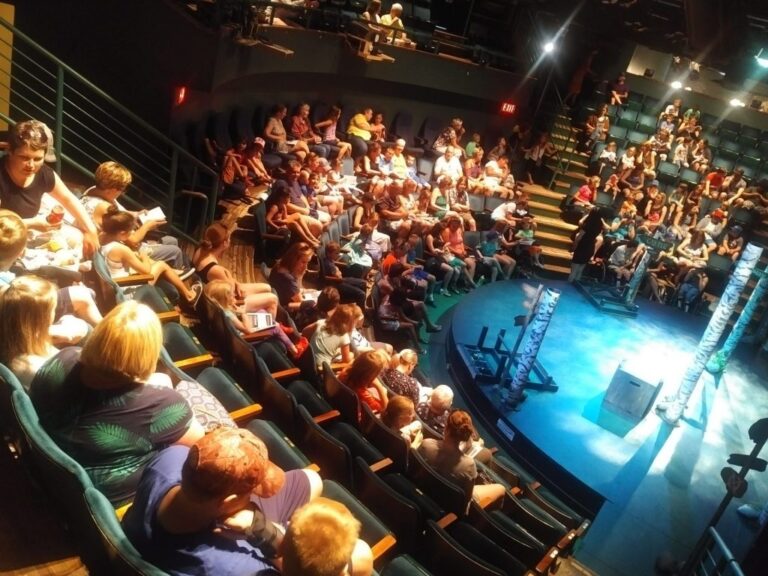
Pictured above: Audience members enjoy a performance in the current Bauer Theatre.
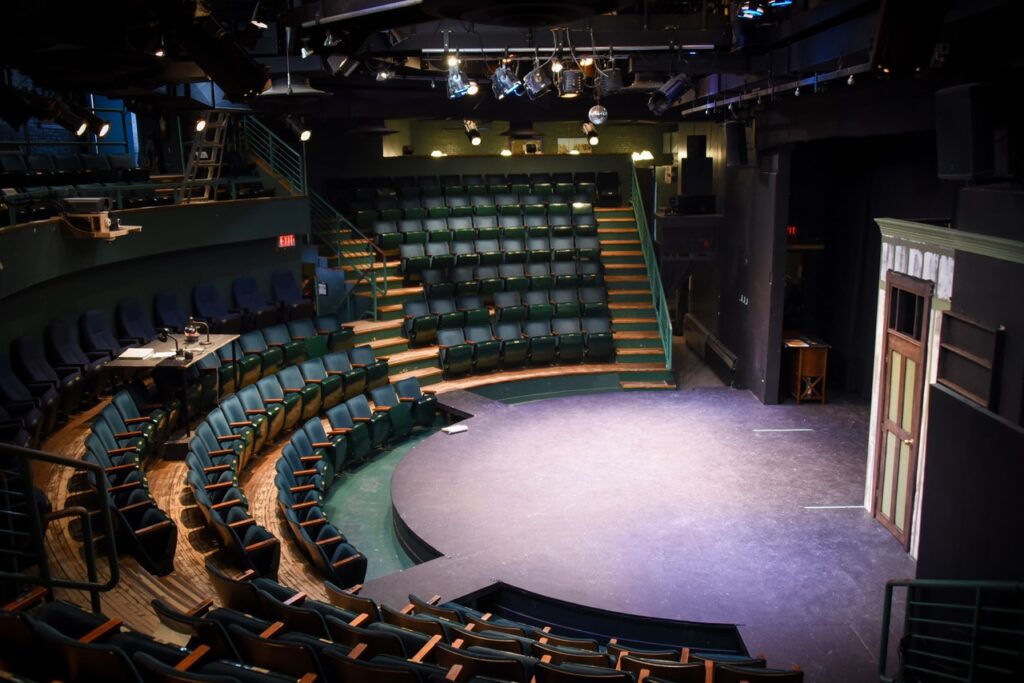
Festival Antigonish Summer Theatre (FAST) is a professional regional theatre company based in Antigonish, Nova Scotia. Founded in 1987, FAST has operated for nearly four decades as a cultural anchor in northeastern Nova Scotia, producing a professional summer season alongside year-round programming that includes education, mentorship, and community engagement. Located in the Bauer Theatre on the campus of St. Francis Xavier University, FAST contributes to regional cultural life and local economic activity through tourism, employment, and partnerships with educational and community organizations.
FAST’s approach is shaped by its rural context, where cultural participation is closely linked to civic life and social connection, and belonging is built through regular and visible participation. Performances, classes, volunteer opportunities, and informal interactions position the theatre as both a communal space and a site for storytelling and entertainment. This proximity also creates accountability, encouraging programming that is accessible and responsive while supporting local artistic ambition.
FAST’s mandate emphasizes Canadian stories, artistic mentorship, and the amplification of voices that have historically been underrepresented on stage. These commitments inform creative decision-making and organizational structure, with inclusion embedded into processes rather than treated as symbolic. Mentorship is central to this approach, pairing emerging artists with established practitioners in professional settings. This intergenerational model supports artistic risk-taking while maintaining professional standards and sustainable learning environments.
The impacts of this model are evident in artist development and retention. Emerging artists gain professional experience and long-term relationships within the local cultural ecosystem, helping counter patterns of talent outmigration common in rural regions. Over time, FAST has supported pathways from youth programming into professional roles across performance, education, and production. For audiences, witnessing artists develop across seasons strengthens community investment and a sense of shared ownership in local cultural life.
Despite its success, FAST faces constraints associated with aging infrastructure. The Bauer Theatre no longer meets contemporary standards for accessibility, technical capacity, or flexible use, limiting programming and ultimately creating barriers for artists and audiences. In response, FAST has advanced the FAST Forward initiative, a proposal for a new, fully accessible performing arts centre developed in partnership with local visual arts leaders and St. Francis Xavier University. The initiative reflects the recognition that infrastructure challenges across the cultural sector in Antigonish are interconnected and require a shared solution.
The proposed centre is envisioned as a shared civic asset rather than a single-use venue. Framed as “One Centre, Two Pillars, Many Voices,” it integrates performing and visual arts to support year-round activity, including exhibitions, education, rehearsals, and performances. Purpose-built, accessible design is a foundational principle, treating access as a baseline condition for dignity, participation, and creative excellence. As part of the Infrastructure Institute’s Accelerator, FAST is refining governance and ownership models to ensure clear decision-making, defined partnerships, and long-term sustainability. Through FAST Forward, the organization positions cultural infrastructure as a core component of rural community development and cultural resilience, designed to serve the region across generations.