
SPRE National Accelerator Spotlight:
Little Jamaica
Community Land Trust
This spotlight is part of the SPRE National Accelerator spotlights series, which highlights organizations across Canada participating in the Accelerator and advancing innovative, community-rooted approaches to affordable housing and social enterprise in their communities.
Little Jamaica Community Land Trust (LJCLT) has emerged as a practical and community-driven response to the changes reshaping Little Jamaica, the historic Afro-Caribbean corridor along Eglinton Avenue West in Toronto. For more than half a century, Little Jamaica has been a cultural anchor for Caribbean immigrants and their families, shaped by Black-owned businesses, community gathering places, and a strong sense of belonging. As transit construction, rising rents, and speculative development began to accelerate displacement in the neighbourhood, LJCLT formed to protect what makes the area unique while supporting residents and cultural entrepreneurs who want to remain rooted in the community.
The pressures facing Little Jamaica are well-documented. Prolonged construction of the Eglinton Crosstown LRT disrupted mobility and foot traffic for more than a decade, contributing to significant business turnover and widespread economic strain. Longstanding Afro-Caribbean shops, restaurants, barber shops, and service providers have been pushed toward closure or relocation, eroding the cultural fabric that defined the area. Many residents and small business owners have found themselves vulnerable to displacement with limited tools to remain in place.
LJCLT’s work responds directly to this challenge. As Toronto’s first Black-led community land trust, the organization is introducing a new model of neighbourhood stabilization that combines heritage preservation, community governance, and real estate strategy. Their mission centers on self-determination: ensuring that the people who built and sustained Little Jamaica continue to shape its future. To achieve this, the CLT acquires and stewards properties to keep them affordable and accessible in perpetuity. This approach removes land from speculation and places it into community control, where decisions are informed by local priorities rather than market pressures.
Community ownership is central to how the LJCLT operates. In practice, it creates predictable, long-term stability for residents and cultural entrepreneurs by giving them a real voice in land use, tenancy, and neighbourhood priorities. Through consultations, member engagement, and ongoing partnerships with organizations such as Black Urbanism TO, the CLT grounds its work in the experiences and aspirations of people who live, work, and gather in Little Jamaica. This governance structure helps ensure that investments in the neighbourhood produce broad and lasting benefits, including opportunities that directly support Black cultural and economic life.
One of the CLT’s most significant projects is a 49-year lease to activate ground-floor commercial space as a cultural community hub. This project is designed to secure room for cultural programming, support Black-led small businesses, and create a focal point for community life in a corridor facing rapid transformation. Years of community engagement and a regional needs assessment have shaped the vision for this hub, which will offer space for events, entrepreneurship, and cultural expression. The goal is to demonstrate a replicable model where public-private partnerships can prioritize local residents and cultural continuity, even as redevelopment proceeds around them.
LJCLT’s partnerships with private developers, community organizations, and technical experts also reflect an emerging strategy for equitable development. By approaching development collaboratively rather than adversarially, the CLT is working to influence how new projects in Little Jamaica can better align with community goals. Their upcoming design charrette will bring together residents, displaced community members, and industry professionals to ensure that the new hub reflects local culture and meets current and future needs.
Through the Accelerator, LJCLT is building a comprehensive business plan and exploring ways to scale this work. The CLT hopes to better understand how culturally relevant programming can support financial sustainability and inform future property stewardship. As they continue acquiring space, refining governance structures, and strengthening partnerships, LJCLT aims to offer a model of land stewardship that other Black communities in Toronto and beyond can adapt.
In a neighbourhood where displacement has become a defining challenge, LJCLT is introducing a clear, grounded solution: community ownership as a tool for cultural preservation, economic opportunity, and long-term stability. Their work demonstrates how local leadership, strategic partnerships, and inclusive planning can create pathways for communities to remain rooted in the places that hold their history and identity.
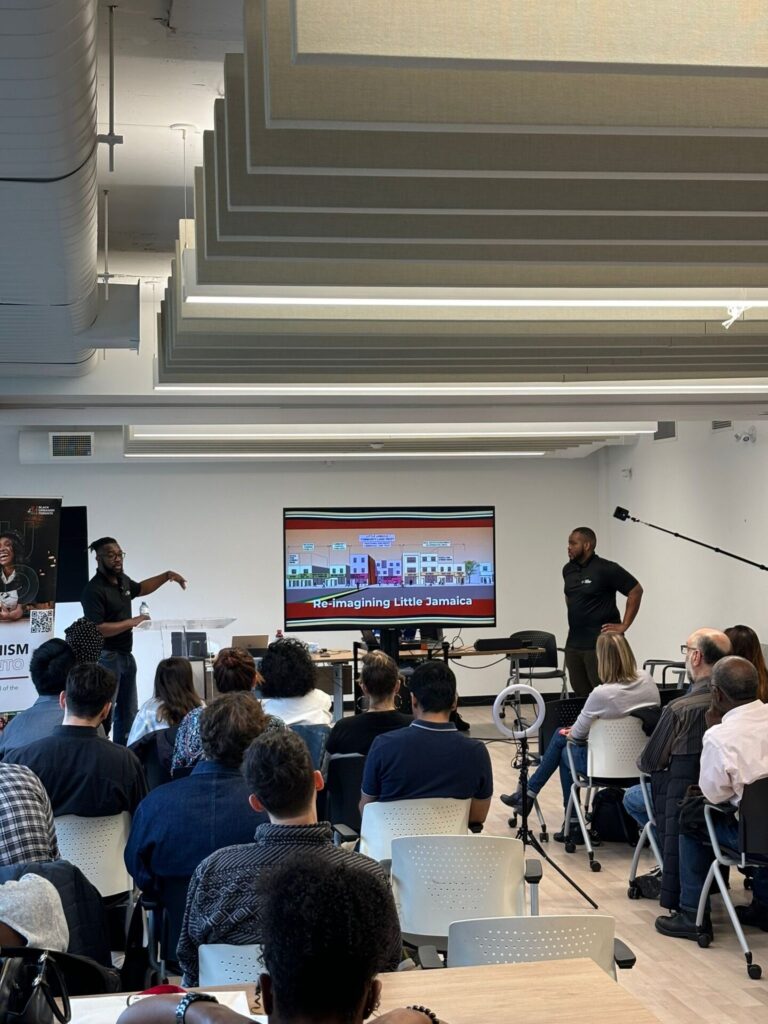
Pictured left: People gather for the launch of the Little Jamaica CLT and community stewardship in the neighbourhood.
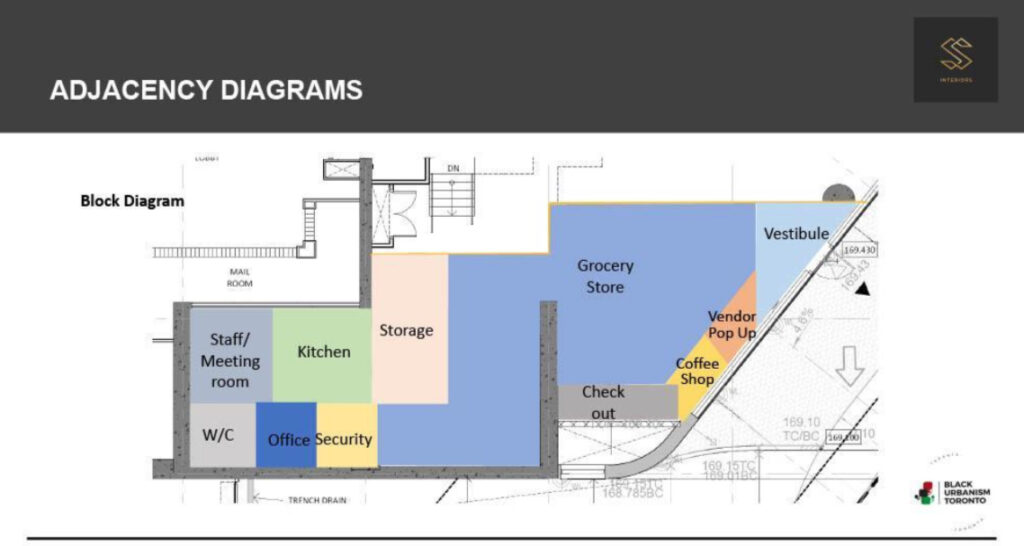
Pictured above: Floor plan of the proposed hub, which includes office space, a grocery store, a cafe, and community space.
Pictured above: Floor plan of the proposed hub, which includes office space, a grocery store, a cafe, and community space.