
SPRE National Accelerator Spotlight:
Vancouver Island Visual Arts Society (VIVAS)
This spotlight is part of the SPRE National Accelerator spotlights series, which highlights organizations across Canada participating in the Accelerator and advancing innovative, community-rooted approaches to affordable housing and social enterprise in their communities.
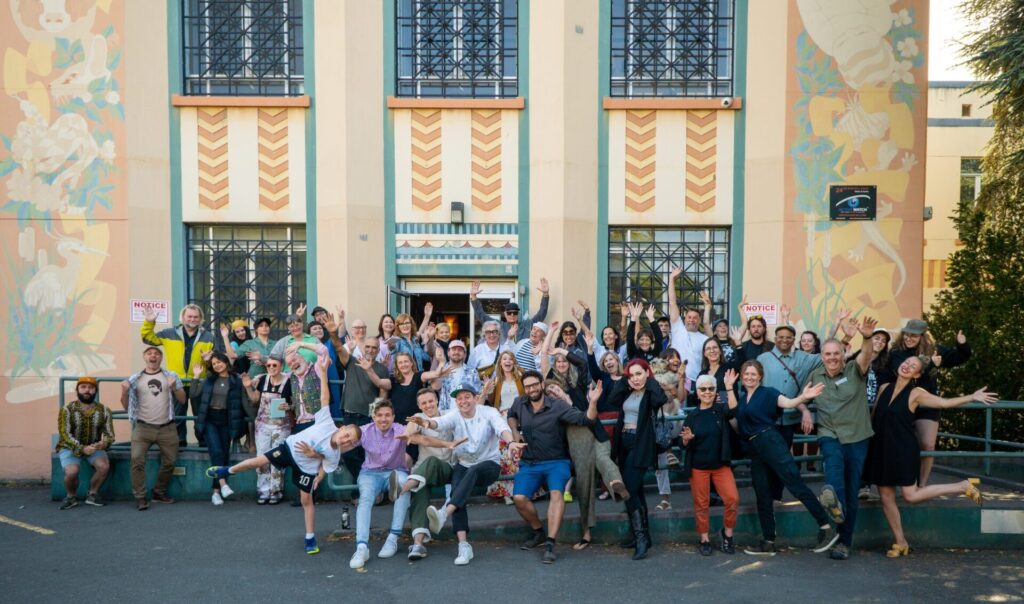
Pictured above: Artists gather in front of 780 Blanchard North
Vancouver Island Visual Arts Society (VIVAS) is a Victoria-based nonprofit organization dedicated to protecting, sustaining, and advancing arts and cultural infrastructure. For over two decades, VIVAS has played a central role in supporting artists and arts organizations by providing deeply affordable studio space, professional exhibition venues, and free public programming. At a time when rising real estate costs and rapid urban development continue to displace creative communities, VIVAS’s work addresses a critical and growing gap in Victoria’s cultural ecosystem.
Affordable and secure creative space has become increasingly scarce in Victoria. Market-driven redevelopment, escalating commercial rents, and the loss of longstanding cultural hubs have placed extraordinary pressure on artists and arts organizations. For many, tenancy offers little security, limiting long-term planning and reinforcing cycles of displacement. VIVAS recognizes that without intervention, the city risks losing not only physical arts spaces but the social and cultural infrastructure they support.
Property ownership has emerged as a central strategic priority for VIVAS. In Victoria’s prohibitive commercial real estate market, ownership represents the only viable pathway to long-term stability for arts and cultural spaces. By transitioning from tenant to owner, VIVAS aims to secure permanent, mission-aligned space that serves artists’ needs rather than market imperatives. This approach reflects a commitment to artist-led stewardship and community-focused cultural infrastructure, ensuring that creative spaces remain accessible, resilient, and rooted in local needs.
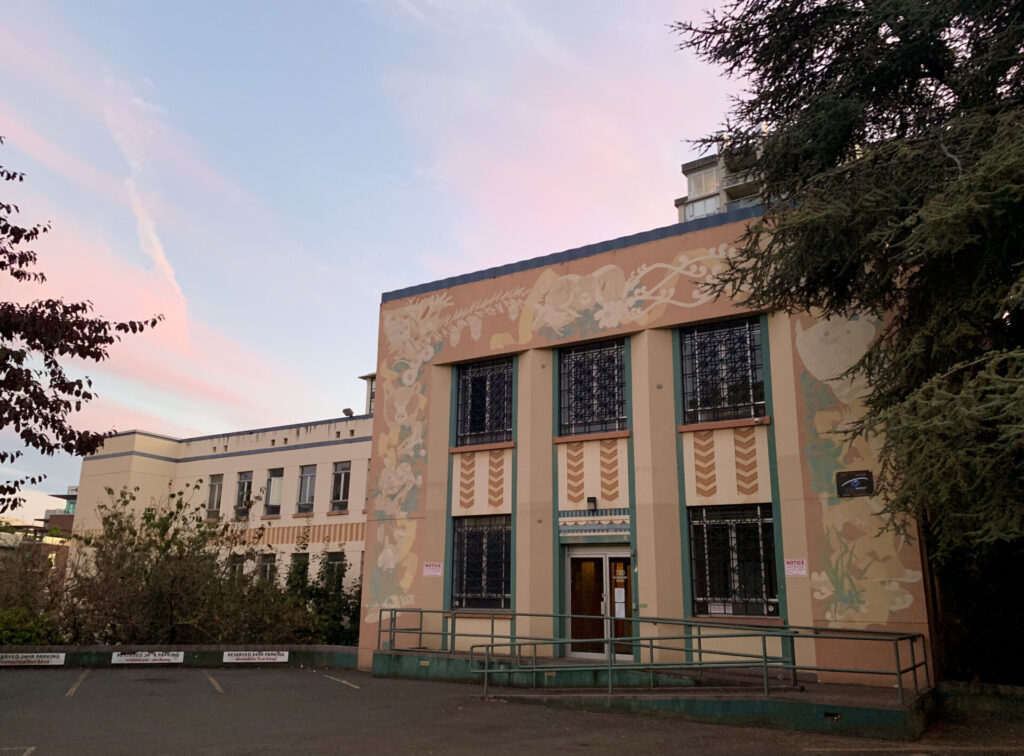
VIVAS currently operates multiple leased properties supporting more than 100 artists, four galleries, and numerous arts and culture organizations. Its flagship hub at 780 Blanshard Street exemplifies the organization’s model: a dense, collaborative arts ecosystem combining studio production, professional exhibition, and year-round public programming. This experience has provided VIVAS with a strong operational foundation and a proven track record in balancing affordability with financial viability. Comprehensive business planning, ongoing maintenance strategies, and long-term operational oversight have enabled the organization to sustain complex, multi-tenant spaces over time.
As VIVAS explores property acquisition, long-term operational sustainability remains central to its planning. The organization is pursuing strategies to minimize financial risk and ensure resilience, including securing substantial down payments to reduce debt service and prioritizing diversified capital sources. These include public sector funding through grants and community amenity contributions, alongside fundraising efforts engaging individual donors, foundations, and institutional partners.
A permanent home would significantly strengthen VIVAS’s ability to support artists and the broader community. Ownership would eliminate rent volatility, enabling long-term planning and continued provision of deeply affordable studios and free public programming. VIVAS envisions a space that supports a wide range of creative activity, including visual arts production, exhibitions, education and skills-sharing workshops, community gatherings, and collaborative projects. The security of ownership would allow these activities to grow and evolve, anchored by stability rather than uncertainty.
Artist-led stewardship is a defining principle of VIVAS’s work. Its governance and operational practices emphasize consultation, shared decision-making, and responsiveness to the needs of artists and organizational tenants. The collaborative model at 780 Blanshard, shaped by ongoing dialogue among diverse stakeholders, demonstrates how governance structures can emerge from community practice rather than top-down planning. This philosophy distinguishes VIVAS’s approach from conventional arts or commercial developments, embedding cultural infrastructure within the lived realities of those who use it.
VIVAS’s history of partnerships and collaborative programming directly informs its vision for a permanent home. Years of operating shared spaces have generated deep institutional knowledge about space design, governance challenges, and community dynamics. Flexible studios that accommodate varied artistic practices, shared resources that reduce individual costs, and gallery infrastructure that meets professional standards all reflect lessons learned through experience. This grounding in practice ensures that future development is informed by proven models rather than abstract ideals.
For VIVAS, the urgency of property acquisition is inseparable from the broader crisis facing Victoria’s arts community. Stories of displacement, lost venues, and shrinking access to creative space underscore the need for immediate action. Protecting creative space is not only about preserving individual studios or galleries, but about safeguarding essential social infrastructure that contributes to community identity, public life, and cultural continuity.
For funders and partners, VIVAS offers a compelling opportunity to invest in stability rather than speculation. With demonstrated operational success, strong community trust, and a clear vision for long-term stewardship, VIVAS is positioned to secure existing creative capacity and prevent further erosion of Victoria’s cultural ecosystem. In doing so, it affirms that protecting arts infrastructure is a necessary and timely investment in the city’s social and cultural future.